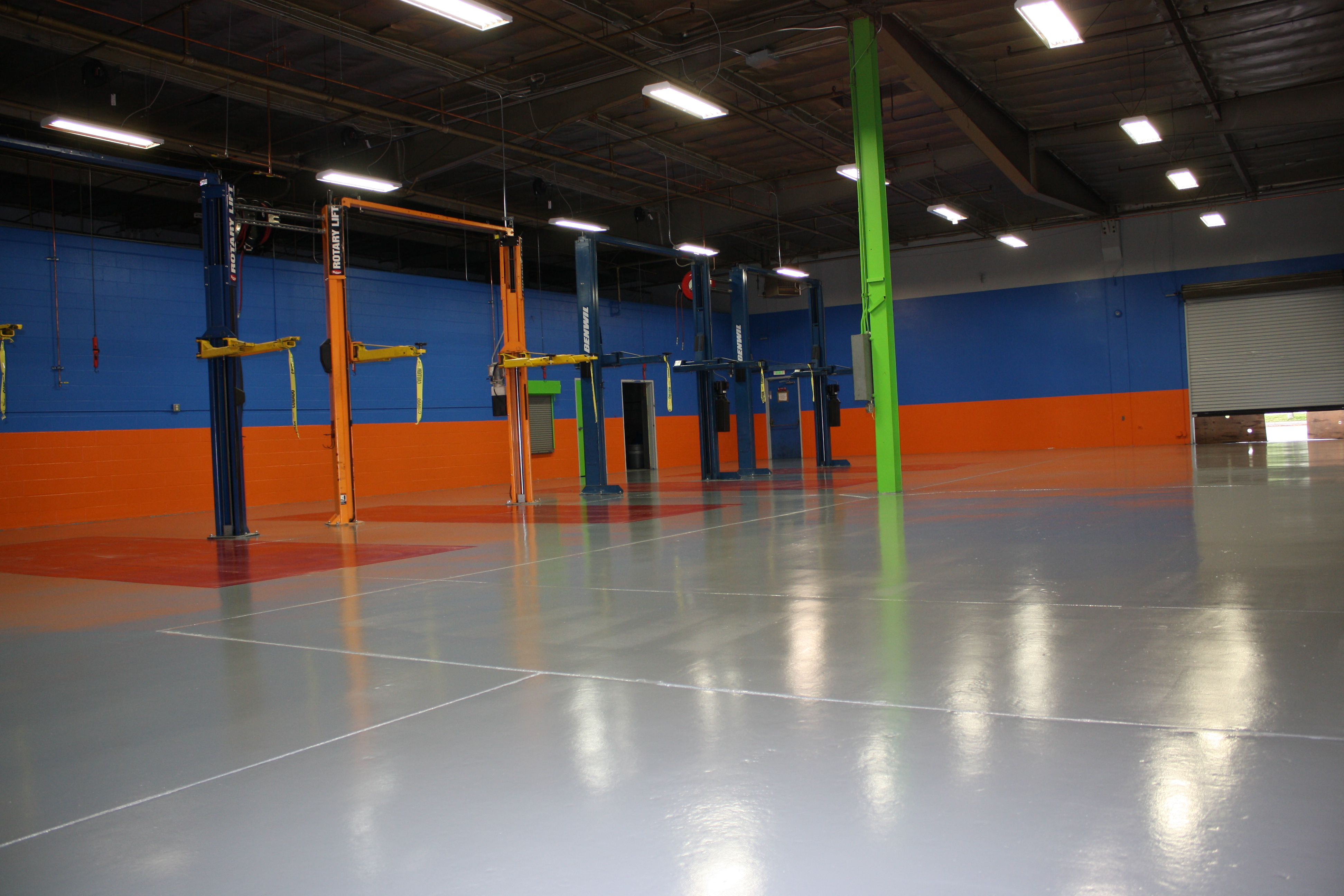
How to Repair Spalling Concrete, Pits and Crumbling in Concrete Surface

If your concrete has small pits that collect puddles and if it seems to be crumbling, then the mixture used to create the concrete mix contained too much water.  “Spalling” is the professional jargon used to describe this event.

 How do You Fix Spalling Concrete?

Concrete spalling is not the easiest do-it-yourself fix.  If spalling is affecting your driveway, causing it to crack all the way through, then only a professional will be able to perform the repair.

However, if the damage is not that far along yet, the repair may be something you can do yourself.  You may end up with a “good enough” level of quality doing it on your own, when a professional contractor could make the job look great.  Ultimately, the choice is up to you, and if you decide to take on the job yourself, this is what you’ll need to do:

Before you even begin your concrete repair job, make sure air temperatures will remain above 50 degrees eight hours after you pour your concrete, and above 32 degrees for 24 hours after that.

To begin repairing your concrete, remove all dirt and debris.  Use a broom to brush your concrete surface clean.  Pull out any weeds in any of the cracks of your concrete, and remove any weeds nearby the edges.

Next, it is important to pressure wash your concrete in order to thoroughly remove as much dirt and debris as possible.  Be sure to only work in one direction so the area becomes as clean as is possible.

Third, tape off any areas you don’t want your new concrete to touch.  One example would be where your bottom step meets your concrete driveway.  If you’re resurfacing indoor concrete, tape off the bottom three feet of your walls.

Fourth, mix your concrete.  Be sure to only mix enough concrete that you can use in about 20 to 30 minutes.  For the average person, this equals about one 40-pound bag, which covers about 35 square feet.  Place the concrete powder in a wheelbarrow or cement mixer, and add water a little at a time until your concrete is equal in consistency to peanut butter.

Next, roll on a layer of bonding agent.  Use two trowels, one to lean on with one hand while you work with the other hand.  Trowel the concrete mixture evenly over the selected surface.  Use the edge of the trowel to smooth the concrete’s surface.  This is probably the most difficult part of the concrete restoration process, and the skills of a professional can make a noticeable difference at this point.  While spreading the mixture, use any leftover concrete mix that is getting kind of hard to fill in any holes.

Before the first coat dries, add a second coat of concrete in the same way as the first.  The purpose of the second coat is to give your concrete a more attractive and finished look.  This time, however, instead of a peanut butter consistency, you’ll want to mix your concrete to a wetter consistency similar to pancake batter.

Before you apply your second coat, test out your mixture to ensure it is at the right consistency.  Lay just a little down on your first coat, and run a concrete broom over it.  If little balls form, the concrete is too dry.  All you need to do is spray on a little water to dampen the first coat more.

Finally, drag your second mixture across the entire concrete surface using a concrete broom.  Spray more water on if necessary.  Finish applying this coat to the entire concrete area, and use a nose tool and cove tool to shape your steps, if you are working on them in this case.

If You’re Confused or Overwhelmed ask for the Help of a Professional 

While you can certainly do this job repairing spalling concrete on your own, it takes less time and you’ll end up with the best product if you use the services of a professional concrete contractor.

Posted in Concrete Repair, Concrete Restoration | Tagged , , | Leave a comment

See How Pros Acid Stain Concrete In 9 Simple Steps

Staining concrete has actually been around for many yeas, but is just now gaining popularity. Business owners, homeowners, and designers are attracted to acid-stained concrete because of the unique look that can be created when different colors of stain are combined.

It’s also possible to achieve an expensive-looking marble, stone, or granite look, and acid staining is much more affordable than actually purchasing those materials.

If you want a basic design that does the job, this is something you can do yourself. However, by hiring a professional contractor, you will receive a much more attractive final product.
Continue reading

Posted in Concrete Coatings, Concrete Restoration | Tagged , , | Leave a comment

How to Polish Your Concrete Floor

Why Should You Polish Your Concrete Driveway?

You’ve been on the fence and have somewhat been thinking about polishing the concrete flooring in your home or business.  Today, we would like to show you why it’s time to jump off the fence and begin polishing your concrete flooring.

Here are some reasons why you might want to begin polishing the surface of your concrete sooner rather than later:
Continue reading

Posted in Concrete Restoration, Concrete Tutorials | Tagged , , | Leave a comment

Concrete Polishing on Industrial Strength Floors

The concrete floors that you see in large retail stores and in many industrial areas. These industrial strength floors are durable, decorative, and beautiful. With the help of your local contractor your dreams of having an attractive, very low maintenance flooring option is within your reach. When you choose concrete for your floors, driveway, garage or patio, you are limited only by your imagination. These floors can look as intricate as stone, as decorative as tile, and as creative as abstract art.
Continue reading

Posted in Concrete Coatings | Tagged , , | 1 Comment

How to Repair Cracks in Concrete

While it often seems to be straightforward, many concrete repairs are much more than meets the eye.  In the concrete repair community, it’s been said that half of all repairs last no longer than 2 years.  In today’s article, we’ll examine how to make a few basic repairs, and some steps you can take to make sure your repairs last.
Continue reading

Posted in Concrete Repair | Tagged , , | Leave a comment

Winter Concrete Maintenance and Caring for Your Concrete Surfaces

Caring for Concrete in Winter Weather is important to maintain long life of concrete structures, and to get the longest possible life out of your material.

Many people experience disappointment after a harsh winter when their new concrete pavement has signs of scaling, the flaking and peeling of the concrete surface. To keep concrete scaling from happening to your new concrete restoration project, follow these steps:
Continue reading

Posted in Concrete Tutorials | Tagged , , , | Leave a comment

Acid Etching of Concrete to Prepare Concrete Surfaces

Acid etching is the process of applying an acid solution to a concrete surface, allowing the acid to react with and ‘etch’ the concrete.

Acid Etching of concrete is a method for commercial concrete surface preparation that will remove most surface deposits on concrete.

Shot blasting is another method to prepare concrete surfaces but requires special equipment and trained professionals, special concrete contractors. Acid etching is the best surface preparation method available for do it yourself homeowners.
Continue reading

Posted in Concrete Coatings, Concrete Restoration, Concrete Tutorials | Tagged , , | 1 Comment

Advantages To Concrete Staining – How to Properly Stain Concrete

Applying concrete stain is not difficult and can transform unsightly old gray surfaces and make them into a pleasing work of art.

Concrete staining is a more viable, long term solution over your floors than paint or concrete epoxy, and provides more options for decoration.

You can do concrete stain for approximately $.50 per sq/ft and have superior durability, ease of cleaning, and a posh look of real stone or marble.
Continue reading

Posted in Concrete Tutorials | Tagged , , , | Leave a comment

When You Need Concrete Repair And Restoration

If your concrete walls, walkways, floors or driveways have become stained or dirty, then concrete restoration could help you to fix these problems. concrete restoration can make your surfaces look new again, without the hassle and expense of completely replacing the concrete.

Special power cleaning tools are used to efficiently renew the concrete. Then a sealant can be applied, which will protect the underlying surface from water and oil stains, which would sink in, on unprotected concrete. However, in certain extreme circumstances concrete repair is the only way to restore concrete to its original condition.
Continue reading

Posted in Concrete Restoration, Repairing Concrete | Tagged , , , | Leave a comment

Types of Concrete Restoration and Available Concrete Repair Options

Concrete Restoration can include superficial cleaning or deep repair of structural concrete. The type of damage sustained by your material will delineate which kind of work will be required to restore the concrete to its original condition.

Types of Concrete Restoration

Continue reading

Posted in Concrete Coatings, Concrete Restoration | Tagged , , , , , , | Leave a comment